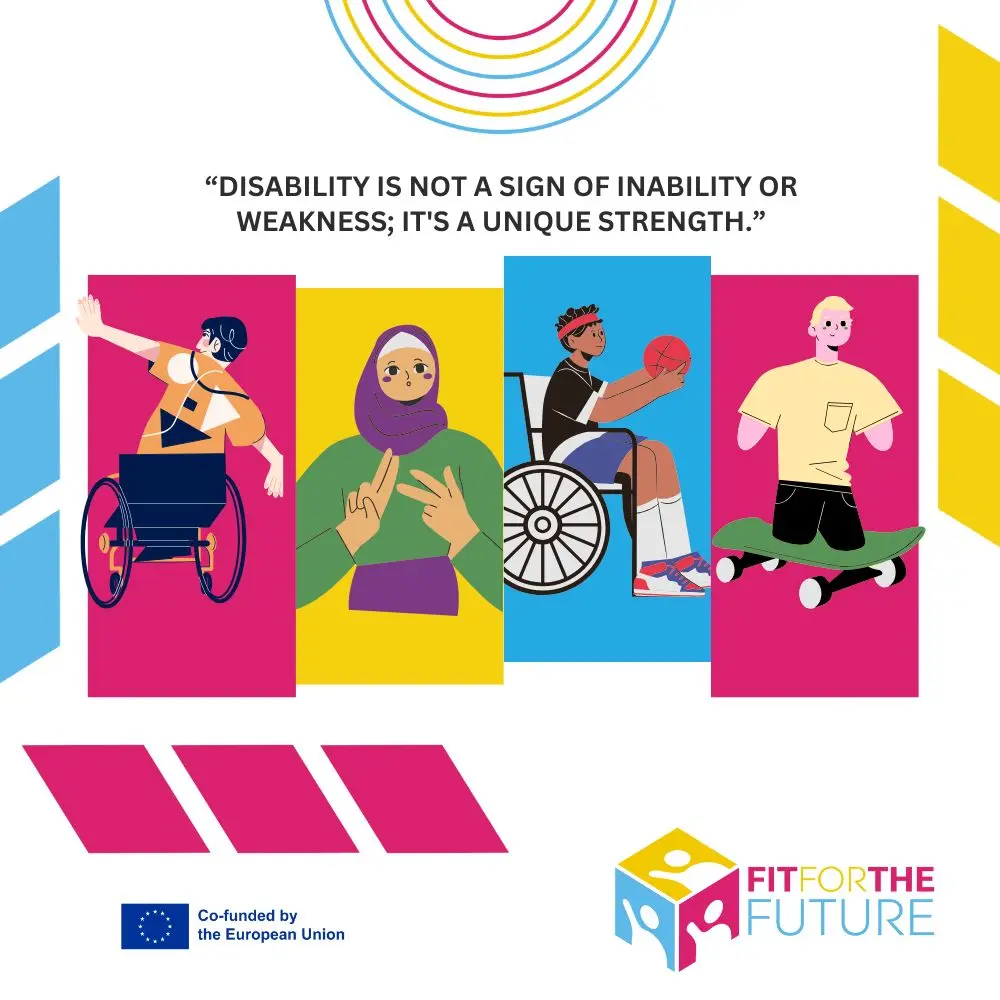
La inclusión como innovación: El enfoque de preparación para el futuro
En una época de rápidos cambios digitales, sociales y organizativos, la verdadera inclusión va más allá de la mera representación de las personas con discapacidad física. Proporcionar rampas, aseos accesibles o adaptaciones básicas ya no es suficiente; debemos reconocer y eliminar las barreras invisibles arraigadas en nuestros sistemas, desde los procesos de contratación y los planes de formación hasta la distribución del espacio de trabajo y las normas de comunicación. El proyecto Fit for the Future (F4F), cofinanciado por el programa Erasmus+, se sitúa a la vanguardia de esta transformación al promover un enfoque sistémico que reinventa los entornos de trabajo y aprendizaje, donde las personas con discapacidad física participan plenamente, contribuyen de forma significativa y desarrollan su potencial de liderazgo. El proyecto demuestra que la inclusión no es una cuestión secundaria, sino un motor fundamental de la adaptabilidad y la innovación.
La discapacidad física abarca un amplio espectro de afecciones —limitaciones de movilidad, deficiencias sensoriales, enfermedades crónicas que afectan el funcionamiento físico— que pueden restringir las actividades cotidianas. A pesar de los importantes avances, las personas con discapacidad siguen enfrentándose a importantes obstáculos en la educación, el empleo y el desarrollo profesional. Según la OCDE, experimentan brechas persistentes en el desarrollo de habilidades, oportunidades laborales e ingresos en comparación con las personas sin discapacidad. En la Unión Europea, más del 25 % de las personas mayores de 16 años declaran tener limitaciones a largo plazo en sus actividades habituales debido a problemas de salud (Eurostat, 2025). Estas estadísticas ponen de manifiesto que la inclusión de las personas con discapacidad física no es un asunto marginal, sino que afecta a una parte significativa de la población y exige respuestas sistémicas integrales.
Para los centros de formación profesional, las instituciones educativas, los proveedores de capacitación y las pymes, fomentar la inclusión requiere un cambio de perspectiva: en lugar de centrarse en cómo deben adaptarse las personas, las organizaciones deben diseñar sistemas que incluyan activamente a todas las personas, independientemente de su condición física. La filosofía de liderazgo regenerativo y pensamiento sistémico de F4F invita a las organizaciones a analizar sus procesos (admisión, impartición de la formación, diseño del espacio de trabajo, progresión profesional) e identificar dónde se excluye implícitamente a las personas con discapacidad física.
Fit for the Future proporciona recursos prácticos para ayudar a las organizaciones a eliminar estas barreras:
- Herramienta de autoevaluación: Evalúe la accesibilidad de la organización e identifique áreas de mejora.
- Auditorías de barreras: Involucrar a las personas con discapacidad en la revisión y el codiseño de procesos y espacios.
- Principios de diseño inclusivo: Garantizar que los entornos digitales y físicos cumplan con los estándares de accesibilidad, incluidas las Pautas de Accesibilidad para el Contenido Web (WCAG) y el diseño universal.
- Programas de mentoría y apoyo entre pares: Empoderar a los empleados y estudiantes con discapacidades para que compartan ideas, orienten las mejoras y actúen como modelos a seguir.
La accesibilidad no es un añadido opcional, sino un elemento clave para construir organizaciones inclusivas y eficaces. Fit for the Future anima a los centros de formación profesional, proveedores de capacitación, pymes y asociaciones a explorar sus recursos de acceso abierto, probar la herramienta de autoevaluación y participar en seminarios web para poner la inclusión en práctica. Al abordar las barreras y crear vías inclusivas, las organizaciones no solo cumplen con la inclusión, sino que impulsan la innovación, fomentan el talento y construyen comunidades más fuertes.