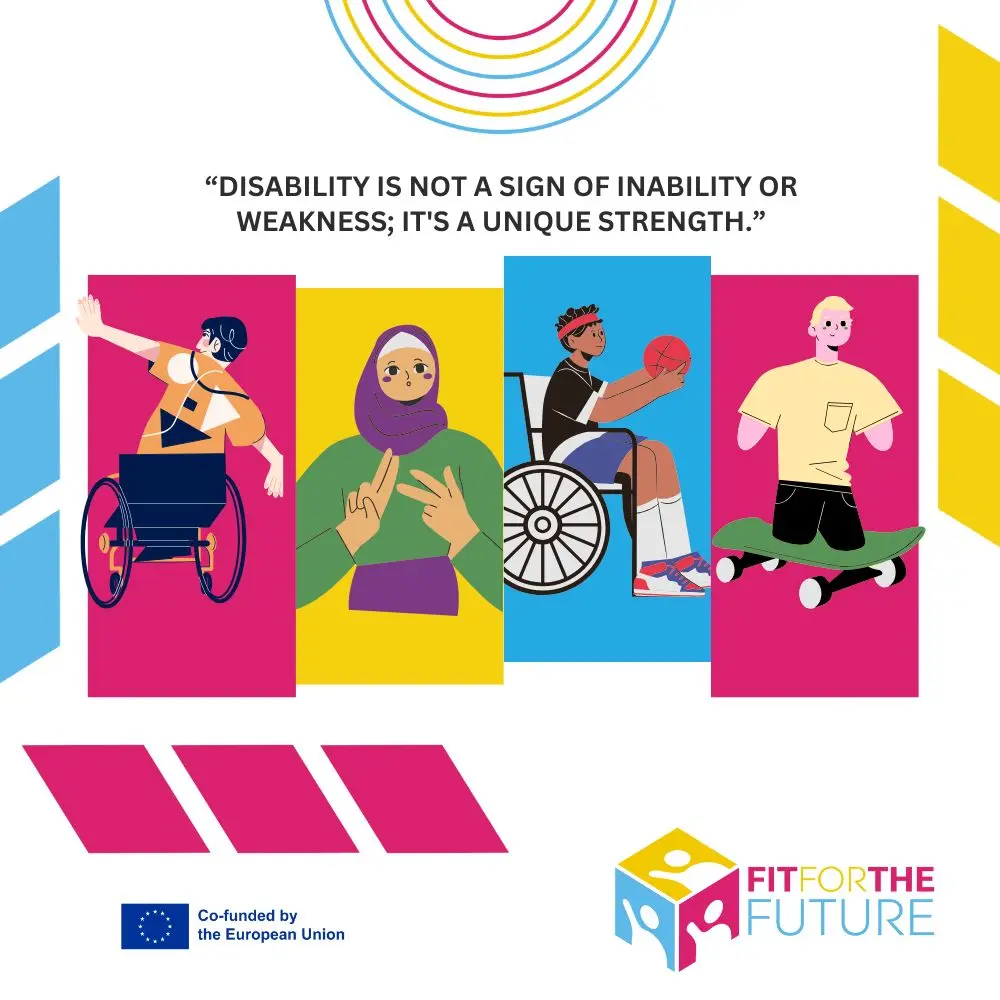
Inclusione come Innovazione: L’Approccio Fit for the Future
In un’epoca di rapidi cambiamenti digitali, sociali e organizzativi, la vera inclusione va oltre la semplice presenza di persone con disabilità fisiche. Fornire rampe, servizi igienici accessibili o accomodamenti di base non è più sufficiente; dobbiamo riconoscere e smantellare le barriere invisibili insite nei nostri sistemi, dai processi di selezione e percorsi formativi fino alla configurazione degli spazi di lavoro e alle norme di comunicazione. Il progetto Fit for the Future (F4F), cofinanziato dal programma Erasmus+, è all’avanguardia in questo cambiamento, promuovendo un approccio sistemico che reinventa gli ambienti di lavoro e di apprendimento, in cui le persone con disabilità fisiche possono partecipare pienamente, contribuire in modo significativo e sviluppare il proprio potenziale di leadership. Il progetto dimostra che l’inclusione non è un aspetto secondario, ma un motore fondamentale di adattabilità e innovazione.
Con disabilità fisica si intende un ampio spettro di condizioni — quali deficit motori, sensoriali o patologie croniche che incidono sulla funzionalità fisica — che possono limitare le attività quotidiane. Nonostante i progressi significativi, le persone con disabilità continuano ad affrontare ostacoli considerevoli nell’istruzione, nell’impiego e nell’avanzamento di carriera. Secondo l’OCSE, queste persone presentano divari persistenti nello sviluppo delle competenze, nelle opportunità di impiego e nel reddito rispetto a chi non ha disabilità. Nell’Unione Europea, oltre il 25% delle persone di età pari o superiore a 16 anni dichiara una limitazione a lungo termine nelle attività abituali a causa di problemi di salute (Eurostat, 2025). Queste statistiche sottolineano che l’inclusione delle persone con disabilità fisica non è un tema marginale, ma riguarda una porzione significativa della popolazione e richiede risposte a livello di sistema.
Per i centri di IeFP (istruzione e formazione professionale), gli istituti formativi, gli enti di formazione e le PMI, promuovere l’inclusione richiede un cambio di prospettiva: anziché concentrarsi su come gli individui debbano adattarsi, le organizzazioni dovrebbero progettare sistemi che includano attivamente ogni tipo di corpo e abilità. La filosofia di F4F, basata su leadership rigenerativa e pensiero sistemico, invita le organizzazioni a mappare i processi (ammissione, erogazione della formazione, progettazione degli spazi di lavoro, progressione di carriera) e a individuare i punti in cui la disabilità fisica viene implicitamente esclusa.
Fit for the Future fornisce risorse pratiche per aiutare le organizzazioni a rimuovere queste barriere:
- Strumento di autovalutazione: Per valutare l’accessibilità dell’organizzazione e identificare le aree di miglioramento.
- Audit delle Barriere: Coinvolgere persone con disabilità nella revisione e nella co-progettazione di processi e spazi.
- Principi di Progettazione Inclusiva: Garantire che gli ambienti digitali e fisici soddisfino gli standard di accessibilità, incluse le WCAG e la progettazione universale.
- Programmi di Mentoring e Supporto tra Pari: Valorizzare dipendenti e studenti con disabilità affinché condividano competenze, guidino i miglioramenti e agiscano da modelli di riferimento.
L’accessibilità non è un’aggiunta facoltativa, ma un elemento chiave per costruire organizzazioni inclusive ed efficaci. Fit for the Future incoraggia i centri di formazione professionale (IFP o in inglese ‘VET’), gli enti formativi, le PMI e le associazioni a esplorare le sue risorse ad accesso libero, provare lo Strumento di autovalutazione e partecipare ai webinar per mettere in pratica l’inclusione. Rimuovendo le barriere e creando percorsi inclusivi, le organizzazioni non si limitano ad applicare i principi di inclusione, ma sprigionano innovazione, coltivano talenti e costruiscono comunità più forti.