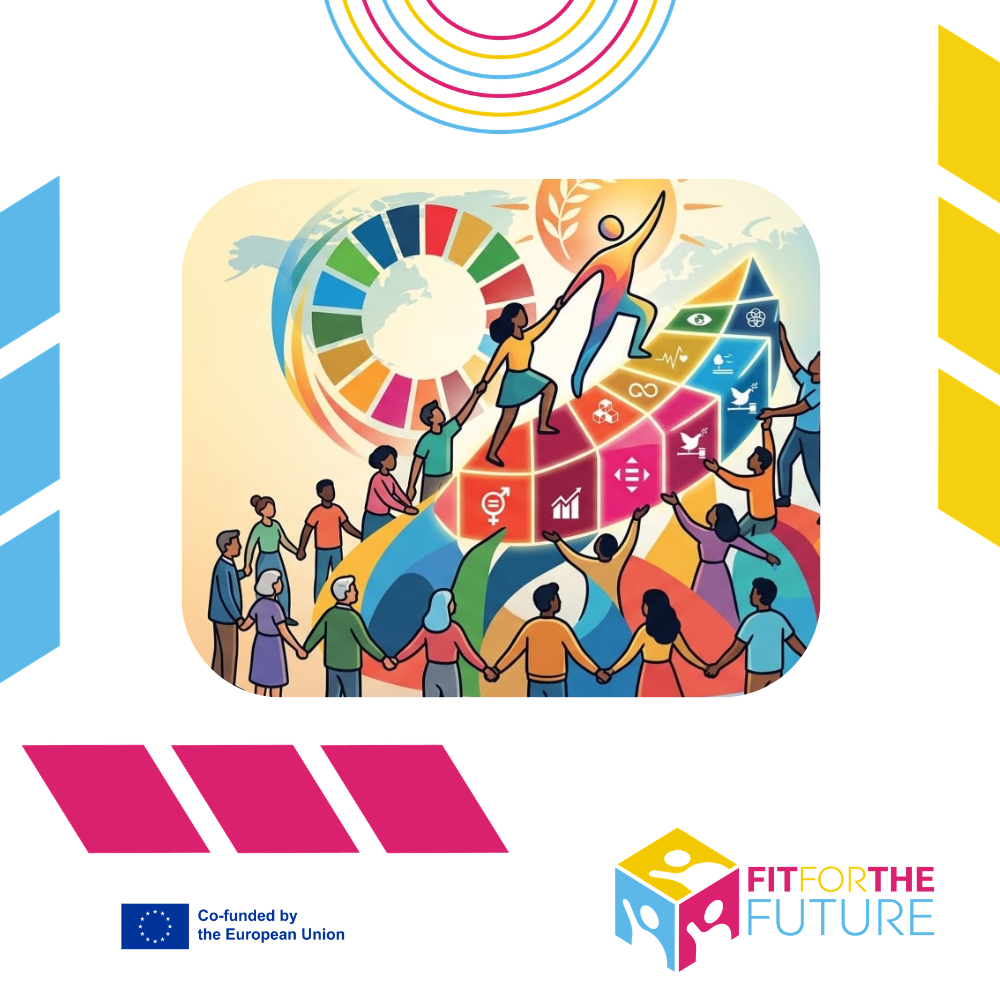
2030 Agenda, Equity and Inclusion: the role of DEI in equality and sustainable development
In today’s globalised and technologically evolving society, organisations operate in increasingly diverse contexts where people bring different cultures, experiences, and perspectives that shape communication, collaboration, and decision-making. In this scenario, Diversity, Equity and Inclusion (DEI) have become essential not only as ethical values but also as strategic drivers of innovation, participation, and organisational performance, aligned with the United Nations 2030 Agenda for Sustainable Development.
Diversity refers to the presence of differences among individuals within an organisation, including gender, age, culture and socio-economic background. However, diversity alone is not enough to ensure equal opportunities. This is where Equity recognises that people do not start from the same conditions and may need different kinds of support to access the same opportunities, by removing structural barriers that limit participation. Inclusion represents the next step: it is about creating environments where everyone feels respected, valued, and able to actively contribute to decision-making and organisational life.
These principles are strongly connected to the values of the 2030 Agenda, particularly the “People” dimension, one of the five “P’s” of sustainable development, which promotes dignity, equality, and social inclusion. Several Sustainable Development Goals directly reflect the logic of DEI: Goal 8, which supports decent work and inclusive economic growth; Goal 10 focuses on reducing economic, social, and political inequalities. In this context, organisations play a crucial role: through fair recruitment processes, transparent pay policies, accessible career opportunities, and a culture based on mutual respect, companies can actively contribute to the achievement of the 2030 Agenda goals. In addition, a large body of evidence shows that inclusive environments foster innovation, employee well-being, talent attraction, and stronger organisational performance.
But what real added value does investing in diversity, equity, and inclusion bring to companies? The answer is not only ethical, but also strategic. Promoting DEI improves the quality of decision-making, expands innovation capacity, and increases adaptability to changing markets. When people feel included and valued, engagement, productivity, and collaboration all increase, with positive effects on the organisation as a whole. The real challenge, therefore, is to ensure that each person can develop their potential and fully participate in social, economic, and professional life. This idea is rooted in the fundamental principles of the United Nations: Article 1 of the Universal Declaration of Human Rights states that “all human beings are born free and equal in dignity and rights.”
The 2030 Agenda translates these principles into concrete objectives, promoting social inclusion, the reduction of inequalities, gender equality, and more participatory institutions. In this sense, DEI becomes an essential tool for turning these principles into everyday practice: recognising diversity, promoting equity, and building inclusive environments means putting into action the UN principle of leaving no one behind, contributing to a fairer, more sustainable society that respects the dignity of every individual.