What happens when we stop managing change and start shaping it?
Can organisations become places where people, ideas and communities do more than simply survive change?
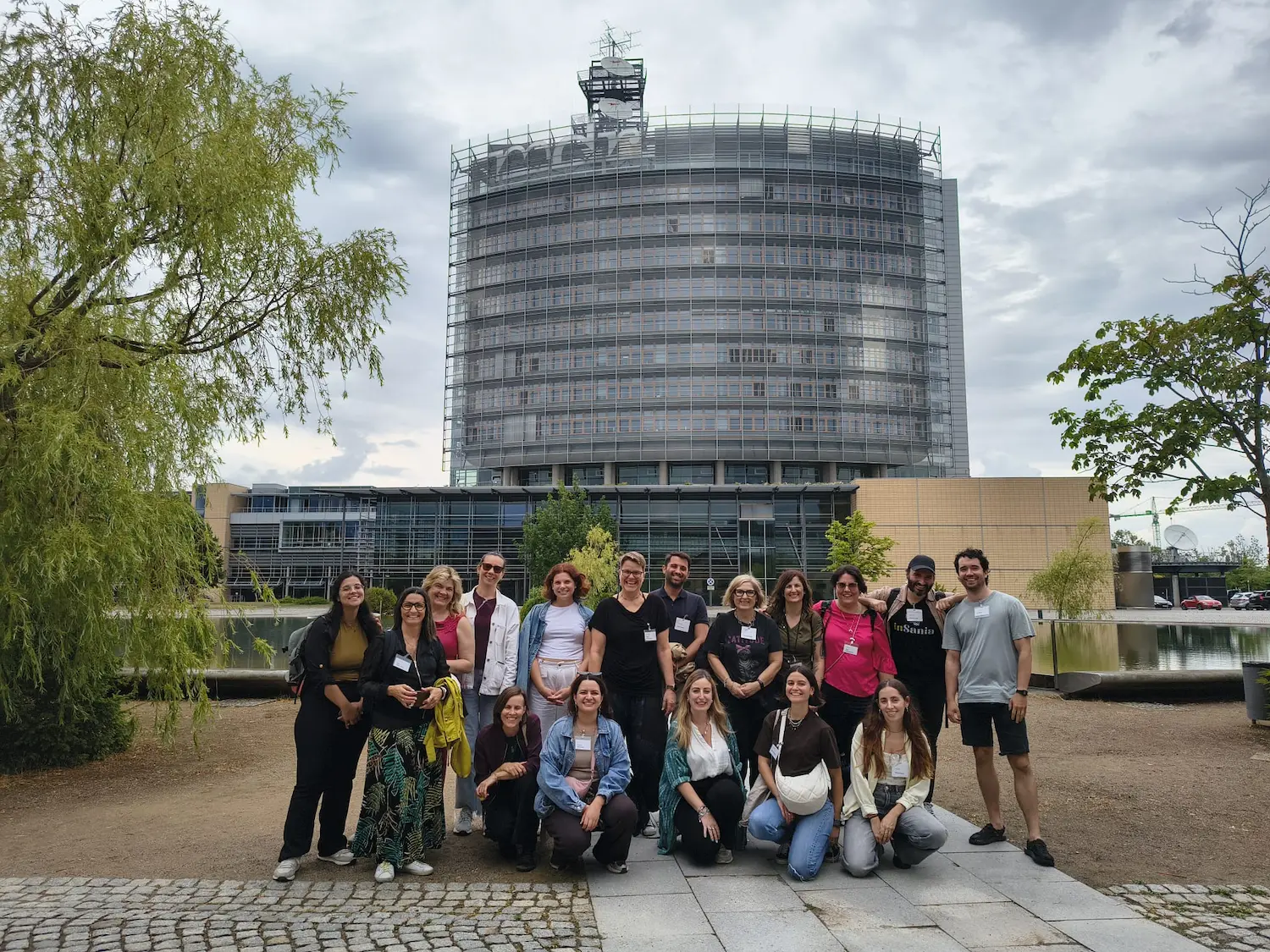
That was the question at the heart of the Fit for the Future learning event in Leipzig. For three lively days, partners and guests from across Europe stepped away from their everyday routines to explore a more ambitious kind of leadership: regenerative, inclusive and ready for the future.
There were no long lectures from the sidelines. Instead, participants mapped systems, tested ideas, challenged assumptions, played games, shared experiences and asked difficult questions about how organisations really work.
More than a training course
The Leipzig Learning, Teaching and Training Activity brought together 17 participants from seven countries, with backgrounds ranging from management and training to engineering, psychology and EU project work.
The programme tackled topics that many organisations are wrestling with right now:
- How do we move from sustainability to regeneration?
- How can we make inclusion part of everyday working life?
- What does good leadership look like when everything feels interconnected and uncertain?
- How can teams create change together instead of waiting for it to happen?
The answer wasn’t a single model. It was a collection of perspectives, practical tools and conversations that participants could adapt to their own reality.
Ideas people could actually use
One of the clearest key takeaways from Leipzig was that big ideas only matter when they lead to action.
Participants highlighted systems-thinking maps, co-creation activities, DEI communication practices, self-assessment tools and the regenerative “goose game” as methods they could use with their own teams. These activities made it easier to talk about complex issues: power, bias, collaboration, inclusion and the connections between decisions.
As one participant put it, managing people also means understanding the systems around them. Another reflected that inclusion isn’t just a policy; it is built through the everyday actions, behaviours and mindset of everyone in an organisation.
That is exactly the shift Fit for the Future aims to support: from good intentions to habits that shape how people work together.
The outcome: greater confidence for what comes next
The response to the event was overwhelmingly positive. Every participant said the agenda was clear and well structured, while 88% said the training fully met their expectations.
More importantly, participants left feeling better equipped for the future. Almost all respondents said the programme had a significant impact on their understanding of the challenges facing their communities, careers and organisations. Nearly nine in ten felt very or totally prepared to handle future changes and challenges.
The event also strengthened participants’ confidence to promote diversity, equity and inclusion, and to build more collaborative workplace cultures.
A future worth practising for
The most successful session focused on regenerative organisational and management practice. But the real value of Leipzig was bigger than any one module.
It showed that change does not begin with a perfect strategy document. It begins when people have the space to think differently together to notice connections, question old habits and try out better ways of working.
The Leipzig experience leaves Fit for the Future with a practical challenge: take these conversations, tools and new perspectives back into our organisations, and use them to make change more inclusive, more collaborative and more regenerative.