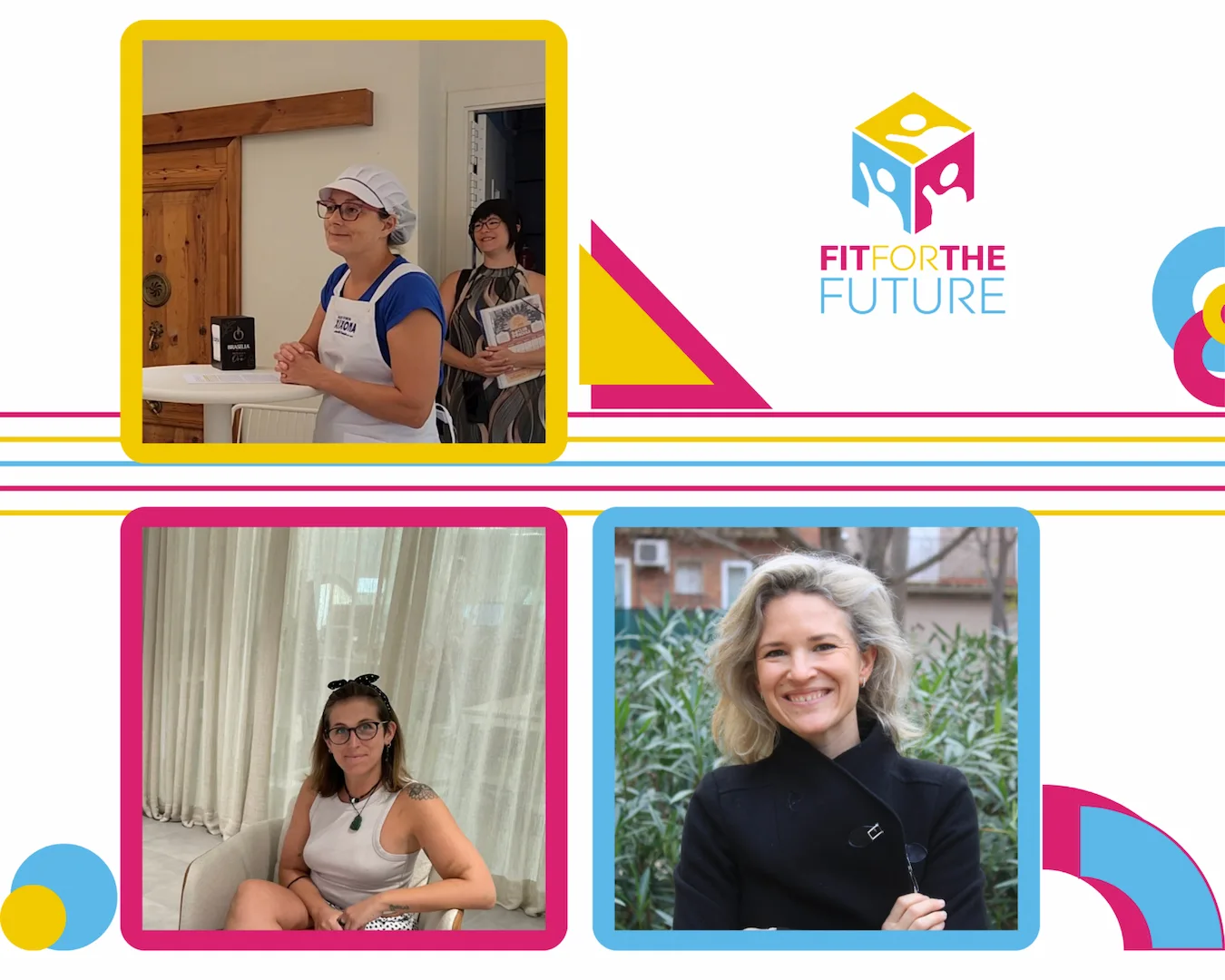
Women driving change: examples of regenerative leadership from Catalonia
The Fit for the Future project uses a systems-thinking methodology to tackle and eliminate workplace and educational barriers linked to gender, cultural, and intersectional discrimination. Through training that fosters regenerative leadership, the initiative strengthens diversity and inclusion in workplaces and educational settings. Furthermore, a core objective is advancing women into leadership roles to help shatter the glass ceiling.
In this context, Edensol interviewed three female leaders from companies in the Reus and Tarragona areas of Catalonia, Spain, to examine their regenerative leadership practices. Empathy, active listening, and continuous learning appeared as the key drivers of a more inclusive organisation.
The importance of empathy
For Júlia Vilà, founder of the micro-enterprise Origens, which specialises in pottery workshops, empathy is the key to creating an inclusive and cohesive environment. Leadership is not about control, but about guidance and support. Stemming from her personal experience working for multinationals in the video game sector – environments often characterised by isolation and a lack of attention to the individual – Júlia’s philosophy places individual well-being at the centre. Manual and artistic activities thus become a therapeutic tool and a means of self-awareness, essential for regaining emotional balance and fostering a deep sense of unity within the team.
Learning from external models
Another recurring theme in the interviews is engagement with external organisations. For Núria Amigor Grau, CEO of the biotechnology company Biosfer Teslab, inspiration for new best practices comes from ongoing collaboration with a diverse range of organisations across research, business, and education. Similarly, Núria del Cacho Verdú, who runs Gelats i torrons Xixona, her family’s fifth-generation ice cream business, enriches her entrepreneurial vision through dialogue with trusted colleagues and by incorporating practices learnt abroad.
Prioritising employee well-being
Listening to and actively seeking the opinions of workers is a common feature among all three leaders. In this regard, Núria del Cacho Verdú places particular emphasis on supporting her employees, creating spaces for dialogue, identifying emotional distress to provide psychological support, and adopting flexible work management to adapt timetables to individuals’ personal needs, as a genuine expression of humanity, not merely organisational efficiency. She considers these initiatives a tangible example of how an organization can become an environment that truly cares, listens, and rewards fairly, showing that respecting personal circumstances builds a deeper connection to work.
These experiences from Catalonia demonstrate that building a regenerative environment is not about implementing rigid formulas, but about embedding humanity into daily workplace practices. By choosing empathy over control, seeking external inspiration, and prioritizing well-being, these three leaders offer a blueprint for fostering diversity and equity in organisations.